
No More Erasure in My Own Land

I was a boy when the police came for me. They dragged me from my home, beat me until pain stopped meaning anything, and threw me into solitary confinement for two years. I was physically, mentally, and psychologically tortured while my parents searched for me and my sister, not knowing whether we were dead or alive. I smelled the fear in the walls, the damp of concrete, the sweat of interrogators, and the old pages of the Bible they left as our only reading material. I read it three times over, not for salvation but for sanity.
When they finally dragged me from my cell, I was sick, frightened, and thin, but I had not broken. They sent us to Hermanus to stand trial and then to Robben Island for five years. Through all of this, I learned what it means to be stripped of humanity and yet remain alive. I learned that the system does not need to kill the Black African to erase him — it simply removes his being from the realm of the human and leaves him breathing inside that absence.
Thirty years of democracy later, I breathe the same air of subjugation neatly wrapped in new colours. The flag changed, the anthem did not, because the hierarchy stayed nailed to the ground. The 1994 settlement was not a revolution. It was a hand-over. I am angry at that trade. I am angry with Tata Mandela for believing that forgiveness could buy justice. He gave absolution to men who never confessed and left us to occupy the ruins of their fortune. The settlers did not budge. They reinvented themselves as investors, trustees and advisers, custodians of the freedom we bled for.
I speak to those who still call themselves comrades while walking over our bodies on their way to boardrooms. You wear liberation songs like designer suits. You invoke the struggle to raise funds, not to raise consciousness. You sit on panels where the poor are discussed as problems. You ask me to moderate my tone so that your sponsors will not flinch. I will not.
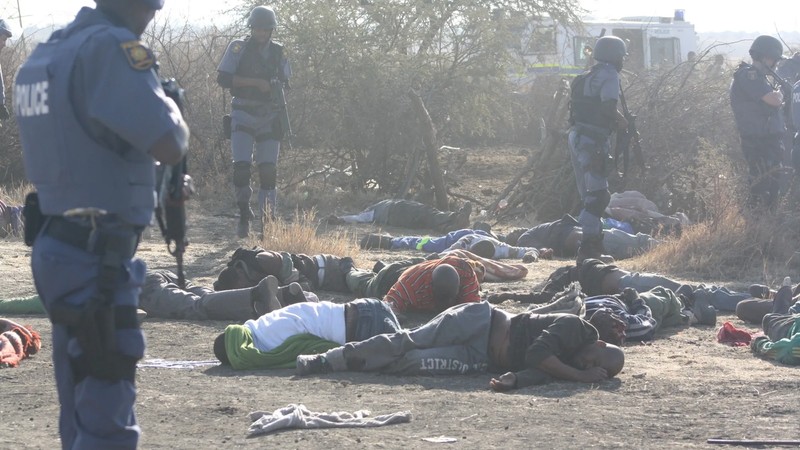
At Marikana in 2012, I watched the state open fire on its own workers, Black African men shot down by Black African police protecting white capital. Thirty-four miners were left in the dust for demanding a living wage. I lived with the widows, filmed their silence and heard their pain long after the NGOs and newspapers had moved on. I felt the same chill that once lived in my prison cell. The platinum they died for still leaves the country every day. The children they left behind still go hungry.
Then Life Esidimeni, one hundred and forty-four psychiatric patients, almost all poor and almost all Black African, starved to death in the name of efficiency. Paperwork became the firing line and signatures replaced bullets.
During Covid, the state declared an emergency and sent soldiers into the townships. They shot Black African men for drinking beer in their yards and beat others to death for walking to their parents’ homes. No one was punished. Hunger was treated as disobedience. The lockdown became a military operation against the poor.
I was there when the police fired on the #FeesMustFall students. I saw young Black Africans fall to the ground in courtyards that were supposed to be centres of learning. The same rifles, the same command language, the same contempt. The students chanted Biko’s name and the state answered with rubber and steel. This was continuity sounding the bell that there was no change.
Then Phoenix, July 2021. In the smoke of hunger and political decay, Indian mobs stopped Black Africans in the streets, questioned their right to exist, beat them, hunted them, shot them and burned their cars while the nation called it unrest. While this dehumanising savagery was digitally beamed in public display — Black Africans being hacked with pangas, kicked, beaten — the court cases were hidden in camera to preserve the dignity of the perpetrators and create the illusion of harmony. Prominent Indian voices who could have confronted the racism chose instead to narrate their fear, turning a massacre into a story of self-defence. The murdered Africans were buried twice, once in the ground and once in public denial. There was no memorial, no outrage, only denial.
The killing of Black life is not always an event. It is a condition. It happens every day in the slow genocide that defines this democracy. It is the landlessness that traps entire generations in shacks and settlements, living without title or inheritance on the same soil their ancestors tilled. It is the hunger that bends the backs of mothers waiting for social grants that can never feed their children. It is the stunted growth of babies born into a diet of maize and despair. It is the lack of clean water, clinics and functioning schools. It is the violence of being left to die on the margins of an economy designed as a death sentence for the poor. It is the pensioner collapsing in a queue, the miner coughing in the dark, the unemployed graduate selling cigarettes to survive. This slow extermination is not a mistake. It is a management plan for the Black African majority — tidy, bureaucratic, and permanent.
Those who call this democracy do not understand the shape of our suffering. The structure did not change. The soil and the banks remain in the hands of those who inherited power, and the rest of us remain the raw material of the nation. Freedom was negotiated on our backs. We were promised transformation, but we received a revolving door of caretakers, each sworn to protect capital while quoting the Constitution.
The truth is that South Africa’s peace depends on our oppression. The Black African remains the invisible pillar that holds up the illusion of order. Our lives are the ground upon which this democracy balances its conscience. We are expected to remain grateful for inclusion while excluded from ownership, to bleed quietly while others speak for us.
This country insists that we whisper our pain. We may bleed, but we may not name it. We may cry, but not loudly. When we rage, they call for calm. When we mourn, they call for balance. Even those who call themselves progressive flinch at the sound of African sorrow. The psyche of this country cannot face us unmasked. It needs us as symbols, never as subjects.
The youth have been turned into apolitical aspirants who chase careers and hashtags while their history is erased before their eyes. They look at our pain as if it were an inconvenience. They have been trained to see struggle as bad marketing. Some join the comfortable minorities in calling for our silence. Then there are those elders, who once called themselves comrades, who whisper that my presence endangers their business prospects. They say my anger might offend potential donors. They want my name removed from their groups so that they can continue feeding from the carcass of revolution without interruption.
I do not call you comrades. You have forgotten what that word means. You turn your faces away from the humiliation we Africans still endure. You never confront your own privilege. You wield your proximity to whiteness as a weapon against those who still fight in the mud. You ask me to be reasonable, to lower my voice, to forget. I will not.
I will not apologise for my pain to those who wield their superiority over me and my people. I am Black. I am African. Memory is my greatest ancestor, and I will not betray it.
I am done with forgetting. I have no gratitude left for a democracy that feeds on Black African absence. I am tired of performing as civilised for your convenience, for a world that requires my silence to survive. My anger is not pathology. It is evidence. It is memory refusing extinction. It is resistance in its purest form.
South Africa pretends that time heals, but time heals only those who were never wounded. The rest of us live with an open and festering sore, a nation that celebrates freedom while policing mourning. The hierarchy of race that defined apartheid still defines democracy, whiteness as ownership, proximity to whiteness as privilege, Black Africanness as expendable. The difference is that now the system smiles while it kills.
I will not thank those who build monuments to themselves from our suffering. I will not forgive the compromise that left my people starving so that markets could sleep easy. I will not call this peace. Until the Black African body is recognised as fully human, until the children of miners and mothers and martyrs can live with dignity, there will be no freedom, only survival.
And as long as this body survives, it will remember everything.

* Sipho Singiswa is a former Robben Island political prisoner, filmmaker, political analyst and freedom fighter. He is co-founder of Media for Justice. He is making a film called Black, in which he travels through memory, struggle, and the Black condition.
** The views expressed do not necessarily reflect the views of IOL or Independent Media.
